FreeFeel Gym Wear / Activewear Sourcing & RFQ Guide
A practical, factory-ready RFQ guide for brand owners buying custom leggings, sports bras, workout tops, shorts, and coordinated activewear sets. Includes a copyable inquiry email, specification tables, quote-comparison method, and sample-to-bulk approval checklist.
To request an accurate activewear manufacturing quote, send suppliers a consistent request for quotation (RFQ) listing garment designs, fabric specifications, measurements, quantities by style and color, size ratios, logos, packaging, quality requirements, and delivery destination. Ask for separate sample and bulk costs, MOQ rules, production timelines, Incoterms, and payment conditions. Compare quotations against the same specifications, then approve physical samples before placing a bulk order.
What Is an Activewear Manufacturing RFQ?
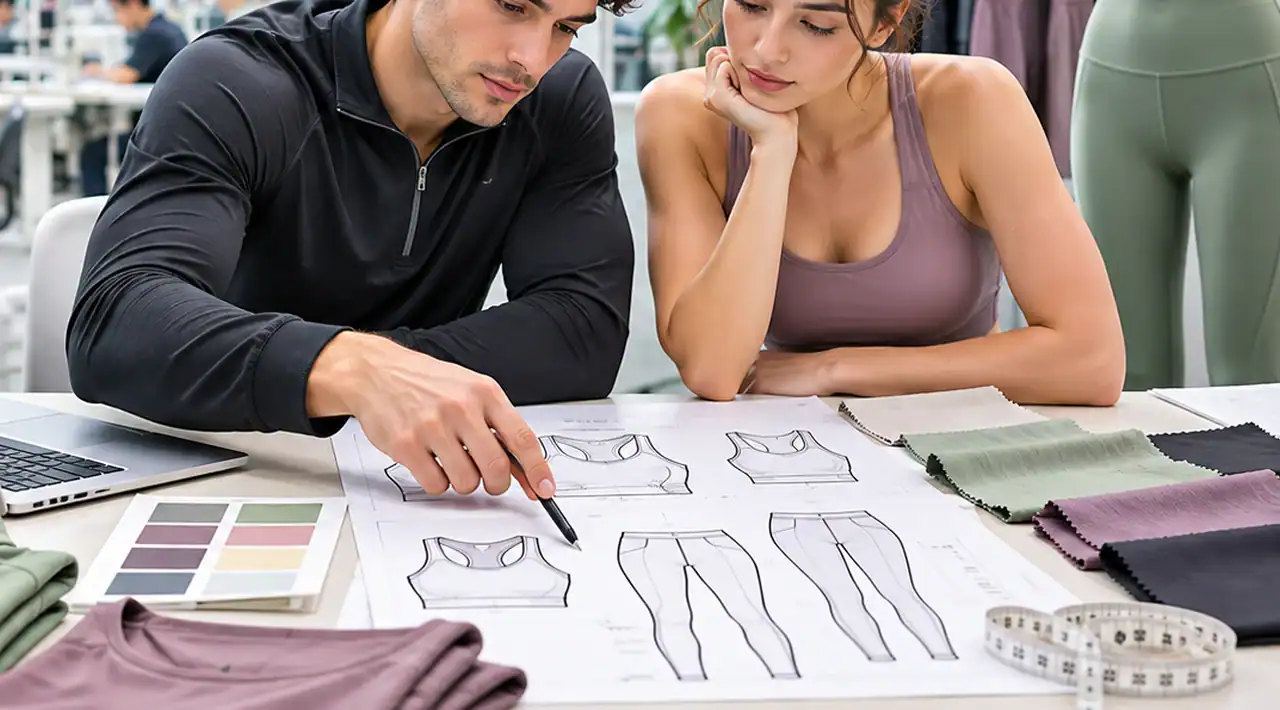
An RFQ (request for quotation) is the structured information a clothing brand sends to one or more manufacturers so each can price a defined product under defined commercial conditions. For private label and OEM activewear, an effective RFQ combines a product specification with a purchase scenario: what to make, how to make it, how many pieces, where to deliver them, and which requirements must be satisfied.
An RFQ is not the same as a general introductory message asking, “How much are your leggings?” A supplier cannot quote accurately without knowing the fabric, garment pattern, trim details, quantity, colors, branding and shipment responsibilities. A vague request usually results in a broad estimate based on assumptions, not a firm price for your intended product.
An RFI (request for information) may come first when you are still checking whether a supplier has the capability or appropriate MOQ. An RFP (request for proposal) may be more suitable for a complex development partnership with multiple technical or service options. In practice, small apparel brands often combine basic company qualification with an RFQ in one concise email.
Activewear RFQ Checklist: 15 Items to Send or Confirm
Use this checklist before asking for unit prices. Some early-stage brands will not have every field finalized; in that case, label it “open—supplier recommendation requested” rather than silently leaving it blank. Suppliers should quote a confirmed base scenario and show the cost or schedule effect of alternatives separately.
| RFQ field | Information the brand supplies | What the manufacturer should confirm |
|---|---|---|
| 1. Buyer and project | Brand, contact, target market, style code, quote reference | Quote number, date, validity and responsible contact |
| 2. Product category | Leggings, sports bra, T-shirt, shorts, jacket or set | Relevant development and production capability |
| 3. Tech pack / flats | Front/back sketches, measurements, construction callouts | Missing details or suggested changes |
| 4. Fabrics | Fiber blend, knit, GSM, color, stretch and recovery targets | Fabric code, mill availability and substitutions |
| 5. Trims and components | Elastics, lining, cups, zippers, drawcords, pockets, thread | Item-level minimums and added charges |
| 6. Sizes and grading | XS–XL or requested size range, measurements and size split | Available grading, tolerance and any size limitations |
| 7. Quantity | Pieces per style/color plus options for larger orders | MOQ counting rule and quantity price breaks |
| 8. Branding | Logo files, size, placement, print/transfer or embroidery method | Setup fees, color limitations and durability testing |
| 9. Labels and packing | Care, size, brand labels, hang tags, bags and carton details | Included versus additional charges; label proofs |
| 10. Samples | Sample sizes, number of versions, approval criteria | Sample cost, included revisions and sample delivery date |
| 11. Quality checks | Relevant tests, acceptable defects, inspection access | Test costs, QC process and rework terms |
| 12. Destination | City, country, delivery postcode or warehouse region | Shipping modes, named destination and estimated transit |
| 13. Incoterm | Requested EXW, FCA, FOB, DAP or DDP as applicable | Exact named place and costs included in each offer |
| 14. Timeline and payment | Requested sample approval and delivery dates | Milestones, deposit and balance terms |
| 15. Intellectual property | Design ownership, confidential files and branding rights | Factory's handling of patterns, artwork and subcontractors |
The checklist is a sourcing framework, not an industry-standard form or a guarantee of compliance. Additional requirements may apply for specific products and markets.
How to Write Product Specifications a Factory Can Price
The specification section is usually the most important part of an OEM activewear RFQ. Attach a custom activewear development brief or tech pack, if available, and describe measurable performance requirements. A factory should know what fabric to source, which operations are needed, and what physical product will be approved before bulk cutting.
Specify waistband height and layering, rise, inseam, pockets, gusset, seam type, stretch recovery, opacity, grading and target fit.
Define compression or cup structure, lining, underband, straps, pad treatment, closure and fit-testing requirements.
Describe fabric weight, neckline, sleeve, fit, ventilation areas, logo method, shrinkage and colorfastness requirements.
Specify liner, hem, pockets, waistband, plus whether each component of a matching retail set is a separate production style.
Example Product Specification: Training Leggings
| Field | Illustrative RFQ entry | Factory response required |
|---|---|---|
| Style code | LG-101, women's high-waist leggings | Confirm style feasibility |
| Fabric | 75% nylon / 25% elastane interlock, target 220 GSM | Propose exact fabric code, tolerances and tested equivalent |
| Construction | Double-layer waistband, gusset, flat seam appearance | Confirm machine/stitch method and construction price |
| Size range | XS–XL; separate grading sheet to be approved | Check measurement and grading assumptions |
| Colorways | Black and dark olive | Confirm stocked fabrics, dye-lot MOQ and lab dips |
| Logo | One heat-transfer mark, artwork supplied separately | Confirm dimensions, application setup and wash test |
| Performance | Stretch opacity, recovery, seam and wash checks | Propose measurable methods and pass criteria |
LG-101, fiber percentages and weight are invented teaching specifications, not FreeFeel's standard leggings formula or an approved technical requirement. A physical sample and test plan must validate the actual design.

What If You Do Not Have a Tech Pack?
You can still send a preliminary RFQ with front/back photos or sketches and a list of required changes, but ask whether the factory offers pattern development and how that work is priced. Record any quote as indicative until the fabric, pattern and sample are approved. Avoid expecting a supplier to reverse-engineer every garment detail from an inspiration photo without a development fee or measurable specifications.
How to State MOQ, Style/Color Quantities, and Size Ratios
MOQ (minimum order quantity) is not always a single number for the whole order. A garment manufacturer may quote a minimum per style and color, while fabric mills and label suppliers may impose separate minimums. To prevent misunderstandings, include a simple SKU matrix with one row per style and color.
| Style | Color | XS | S | M | L | XL | Total |
|---|---|---|---|---|---|---|---|
| LG-101 leggings | Black | 10 | 20 | 35 | 25 | 10 | 100 |
| LG-101 leggings | Dark olive | 10 | 20 | 35 | 25 | 10 | 100 |
| Total | 2 colors | 20 | 40 | 70 | 50 | 20 | 200 |
This is an illustrative 200-piece order and invented size mix; it is not a recommended demand forecast. A supplier must confirm whether sizes may be mixed and whether each color meets its relevant minimum.
FreeFeel Gym Wear states a starting MOQ of 100 pieces per style/color, subject to project-specific confirmation. In the example above, one design in two colors makes 200 garments under that stated rule—not 100 garments split across both colors. Do not assume another manufacturer uses the same rule.
Request prices for the exact quantity shown and, when relevant, a second scenario of 300 or 500 units. Ask whether changing quantity affects available fabric, unit price, sample credit, or packing charges. If the supplier proposes 500 pieces for a discount, calculate the additional working capital tied up in inventory before agreeing.
Copy-and-Paste Activewear Manufacturing RFQ Email Template
Use this template to contact several shortlisted factories. Replace all text in square brackets before sending, attach your tech pack or style brief, and avoid disclosing unnecessary confidential materials until supplier identity and information-sharing terms are understood.
Subject: RFQ — Custom Activewear Manufacturing — [Brand] — [Styles] — [Quantity]
Hello [Supplier Contact],
My name is [Name], and I represent [Brand], an activewear brand selling to [Target Markets]. We are evaluating manufacturing partners for our upcoming collection and would like an itemized quotation based on the details below.
1. Product and design: [e.g., women's high-waist training leggings, style LG-101]. Please see the attached [tech pack / technical sketches / reference sample description]. Required construction: [waistband, panels, gusset, pockets, seams].
2. Fabric and performance: [composition], [knit structure], [GSM], [stretch and recovery expectations], [opacity / wicking / other relevant tests]. Please identify proposed fabric codes, available colors, material minimums, and any alternatives.
3. Quantity: [pieces per style and per color]. Planned sizes: [XS–XL], with the attached size breakdown. Please confirm MOQ by style/color and any size, fabric, trim, or dye-lot minimums.
4. Branding and packaging: [logo method and placement], [brand/care/size labels], [hang tags], [individual packaging], [carton marks]. Please specify included and additional costs.
5. Sampling: Please quote first sample cost, included revisions, shipping to [sample destination], sample lead time, and whether eligible fees are credited against a bulk order.
6. Bulk quotation: Please provide unit prices for [e.g., 100, 200 and 500] pieces for the same design/color assumptions, with any tooling, testing, artwork, labeling or other charges listed separately. State the quote currency, validity period and price assumptions.
7. Quality: Please describe fabric inspection, in-process and final QC, relevant garment test options, measurement tolerances and whether third-party inspection can be arranged before shipment.
8. Delivery: Destination: [city, country, postcode or port]. Please state the proposed Incoterm 2020 with exact named place, transport mode, production lead time after approved sample/material readiness, estimated transit, and any excluded duties or taxes.
9. Commercial and factory details: Please state payment milestones, legal contracting entity, manufacturing site, any subcontracted processes, pattern and artwork ownership terms, and the main technical contact.
Our requested quotation date is [Date]. Please identify any information still needed and do not substitute fabric, construction or trims without clearly labeling the alternative quote.
Thank you. We look forward to reviewing your proposal.
Best regards,
[Name]
[Brand / Website]
[Email / Business Contact]
The template is intentionally more detailed than a two-line inquiry. It makes prices comparable and gives a serious supplier a chance to identify unresolved details early. For a very simple stock-style private-label order, you can shorten the fabric and construction fields, but keep the MOQ, branding, sample, QC and delivery questions.
What Should an Itemized Factory Quotation Include?
A usable quote should name the exact specification and commercial conditions behind the price. Manufacturers may issue a preliminary estimate before sample approval and a revised firm quote after confirming the fabric, final construction and quantities. Compare quote versions carefully; an earlier estimate is not necessarily a final purchase price.
| Quotation line | What to ask | Why it matters |
|---|---|---|
| Unit garment price | Currency, piece unit, style/color/size assumptions, included trims | Establishes a fair baseline |
| Sample and development | Pattern, grading, fit revisions, prototype shipping and credits | Identifies one-off versus recurring charges |
| Fabric and color charges | Stock versus custom, dye lot, lab dip and surcharge | Exposes material minimums and delays |
| Branding and packaging | Logo setup, labels, bags, cartons and extra components | Prevents omitted finished-product costs |
| Testing and inspections | Requested lab tests, in-line, final and independent checks | Connects price with quality obligations |
| Tooling and IP | Any mold/tooling fees; pattern files and rights | Clarifies future reorder and supplier-transfer costs |
| Logistics and import | Transport, origin, Incoterm, named place, charges excluded | Prevents factory price from being mistaken for landed cost |
| Quote conditions | Validity, deposit, balance, timeline, change-order policy | Controls commercial and schedule risk |
Incoterms: EXW, FCA, FOB, DAP and DDP
Incoterms are standardized trade terms allocating specified delivery obligations, costs and risk between seller and buyer. Always state the named place and applicable edition, for example “FCA [named terminal], Incoterms 2020”. Do not assume a shipping quote includes customs duty simply because the goods will arrive at your warehouse.
| Term | Practical meaning for sourcing | Important buyer check |
|---|---|---|
| EXW | Seller makes goods available at the named place; buyer bears extensive onward responsibilities | Export clearance and loading arrangements must be feasible |
| FCA | Seller hands goods to the carrier at the named place under agreed conditions | Which site or terminal and who arranges onward carriage? |
| FOB | For sea or inland waterway shipment; seller delivers on board at named shipment port | Not the correct term for air freight; check suitability for containerized transport |
| DAP | Seller delivers to the named place ready for unloading; buyer usually handles import clearance | Which duties/taxes and unloading costs remain with buyer? |
| DDP | Seller bears specified delivered-duty-paid obligations, including import clearance under the term | Can the supplier legally and operationally perform those obligations at destination? |
Incoterms have detailed risk-transfer and cost-allocation rules beyond this simplified comparison. Confirm terms with your freight forwarder or trade professional. DDP availability should never be assumed, and current tariffs are not provided here because rates vary and can change.
Worked Example: RFQ Budget for 200 Custom Leggings
Assume the buyer requests 100 black + 100 dark olive leggings, one design, five sizes, with an invented production unit price of $14.60. Below is an example of separating the garment quote, acquisition-related costs, and one-time project cash needs. Every dollar amount is hypothetical. These are not FreeFeel prices, China market averages, or a customs estimate.
| Example line item | Calculation | Illustrative USD |
|---|---|---|
| Garment production | 200 × $14.60 | $2,920 |
| Extra labels and packaging | Assumed charge outside unit quote | $140 |
| Production inspection | Assumed allowance | $210 |
| Freight and receiving | Assumed allowance | $520 |
| Nonrecoverable import charges and fees | Illustrative placeholder | $390 |
| Modeled inventory-acquisition subtotal | $2,920 + $140 + $210 + $520 + $390 | $4,180 |
| Modeled acquisition cost / pair | $4,180 ÷ 200 | $20.90 |
| Sample development | Hypothetical one-time expense | $260 |
| Contingency reserve | Unspent planning buffer unless needed | $300 |
| Total planned cash budget | $4,180 + $260 + $300 | $4,740 |
| Cash budget / pair | $4,740 ÷ 200 | $23.70 |
The acquisition subtotal is a simplified planning model, not accounting advice. Treatment of sampling, inspection, recoverable taxes and other expenses depends on circumstances and accounting standards. The contingency reserve is not an incurred cost unless spent. Obtain an actual destination-specific tariff and import quote.
For a real order, request a second quote at a higher quantity and compare the total stock exposure. A discount from 200 to 500 pairs can reduce unit cost while making the cash and inventory risk much larger, especially when the brand has not tested the customer size distribution.
How to Compare Three Activewear Manufacturing Quotations Fairly
Once the quotes arrive, reject misleading comparisons. Supplier A may include labels and final inspection while Supplier B prices only cut-and-sew production. Supplier C may use an easier-to-source polyester fabric instead of the specified nylon blend. These are not the same offer unless differences are identified and normalized.
| Comparison field | Supplier A | Supplier B | Supplier C |
|---|---|---|---|
| Exact fabric specification matched? | Record yes / exception | Record yes / exception | Record yes / exception |
| MOQ per style and color | Enter confirmed rule | Enter confirmed rule | Enter confirmed rule |
| Sample fees and revisions | Enter inclusions | Enter inclusions | Enter inclusions |
| Unit price and total garment subtotal | Enter quote | Enter quote | Enter quote |
| Labels, packaging and testing | Included / added | Included / added | Included / added |
| Incoterm and named place | Enter full term | Enter full term | Enter full term |
| Actual estimated arrival date | Enter date + assumptions | Enter date + assumptions | Enter date + assumptions |
| QC evidence and factory verification | Attach documents | Attach documents | Attach documents |
Sample Weighted Scorecard
| Evaluation factor | Illustrative weight | Evidence |
|---|---|---|
| Approved sample quality and fit | 30% | Wear tests, measurements, fabric results |
| Fully normalized delivered cost | 25% | Same specification, quantity and logistics assumptions |
| Relevant production capability and QC | 20% | Factory verification, test and inspection process |
| MOQ, capacity and delivery reliability | 15% | Written quantity and milestone commitments |
| Communication, files and commercial clarity | 10% | Clear revisions, IP and payment conditions |
| Total | 100% | Adjust to brand priorities |
Weights are invented decision aids, not research-backed industry standards. An unresolved fraud, safety or quality issue should not be outweighed by a high spreadsheet score.
From First RFQ to Production: An Eight-Step Process
Prepare one controlled brief
Define the garment, target market, measurements, fabric, colors, MOQ scenario, branding and quality requirements. Give each attachment a style code and revision number so suppliers cannot accidentally quote different versions.
Output: versioned RFQ package.
Shortlist qualified manufacturers
Ask whether each supplier actually manufactures your garment category, where production occurs, and whether relevant operations are subcontracted. Confirm its legal company identity before sharing sensitive materials or paying a deposit.
Output: supplier eligibility list.
Send identical RFQ packages
Give the same quantity matrix and required quote fields to every candidate. Request written disclosure of any fabric or construction alternatives, not an unexplained unit price.
Output: comparable written proposals.
Clarify assumptions and select a sample candidate
Review missing charges, style/color minimums, test requirements, Incoterms and the proposed production schedule. Choose suppliers whose technical answers are credible and whose sample process is clearly described.
Output: clarified quote and sample order.
Test physical samples and approve revisions
Wear-test relevant sizes, measure key POMs, review fabric stretch, opacity and wash behavior, inspect workmanship and approve logo placement. Record revisions instead of sending scattered feedback across messages.
Output: approved sample and revised tech pack.
Request final bulk quotation
After the sample is approved, reconfirm material codes, quantities, labor steps, branding, QC, delivery terms and price validity. A first estimate may change if the actual approved product differs.
Output: final itemized pro forma / quote.
Issue the purchase order and agree on checkpoints
Record the contracting entity, payment milestones, approved documents, shipment deadline, inspection rights, defect remedies, and permitted substitutions. Match the beneficiary to verified business information.
Output: confirmed purchase order and QC plan.
Inspect and reconcile the shipment
Check incoming fabric if feasible, in-line production, final garments, carton quantities and shipping documents. Compare delivered goods with approved samples and log any issues before the next order.
Output: received-order scorecard and reorder data.
Sampling, QC and Factory Verification Questions for the RFQ
Sport-specific quality requirements are more useful than generic statements such as “premium quality.” A reliable activewear RFQ should identify the expected outcome and how it will be measured. Different products have different high-risk points, so select tests based on use and target market rather than asking for every laboratory test by default.
| Product or stage | Relevant check | Question for the factory |
|---|---|---|
| Leggings | Stretch opacity, recovery, seams, waistband fit | How will these be checked on the approved sample and bulk? |
| Sports bras | Band and strap stability, comfort, lining and cup fit | How are support claims and fit checked across sizes? |
| Training tops | Wash stability, pilling, colorfastness, logo durability | Which test methods and sample references are used? |
| All categories | Fabric composition, GSM, color and grading tolerance | Can bulk fabric and measurements be linked to the approved reference? |
| Final inspection | Workmanship, packing, quantity and defect criteria | Is an independent pre-shipment inspection allowed? |
Ask for test methods, sample identification, dates, results, and written acceptance limits. If the factory advertises specific certifications or recycled content, verify their validity and scope for the actual material or production site. A photo of a certificate alone does not prove every garment is covered.
Manufacturer Perspective: What FreeFeel Can Quote More Accurately
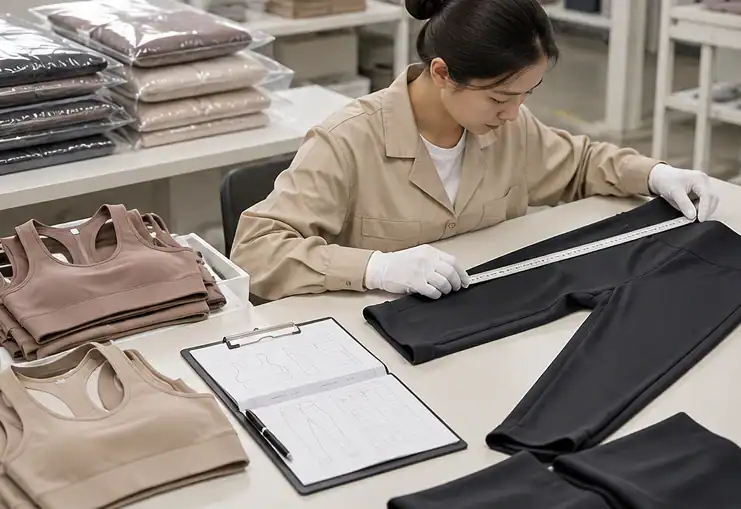
From a production-planning standpoint, complete specifications reduce guesswork about fabric consumption, cutting, sewing operations and labels. A well-prepared RFQ also lets the factory advise when a stocked fabric, established pattern or simpler construction may be appropriate, while keeping the alternative clearly separate from the original request.
FreeFeel Gym Wear describes itself as a China-based OEM and private label activewear manufacturer, with company-stated reference terms of MOQ from 100 pieces per style/color, samples in approximately 7–10 days, and bulk production in approximately 25–35 days. These figures are provided by the company, are subject to individual project confirmation and do not guarantee shipping or customs transit times. Supplier-provided background includes 15+ years' experience, a 3,000 m² facility and 100+ workers; these statements have not been independently audited for this article.
Seven Common RFQ Mistakes That Cause Bad Quotes
Without fabric and construction, a price may describe a different garment than the one you want to sell.
Two colors may require two minimum runs; sets may contain separate garment styles.
Different trade terms allocate different freight, risk, clearance and import responsibilities.
Custom hang tags, care labels, bags and carton markings can add meaningful charges.
Changes to fit, fabric or logos should be reflected in a revised quote and controlled tech pack.
Allow for approvals, material availability, final inspection, transport and customs processing.
Confirm legal identity, manufacturing site, bank details and defect remedies before committing cash.
Final Pre-Send RFQ Checklist
FAQ: Activewear Manufacturing RFQs and Quotations
What does RFQ mean in activewear manufacturing?
RFQ stands for request for quotation. It is a structured inquiry requesting prices and commercial terms for a defined garment specification and order scenario. A good activewear RFQ includes design, fabric, size breakdown, branding, quality, MOQ, destination and delivery conditions.
Can I request an activewear quote without a tech pack?
Yes, for an initial feasibility estimate. Send sketches or references and the closest available specification, marking unresolved details clearly. Ask whether the supplier offers tech-pack or pattern development and when it can issue a firm quote based on an approved sample.
What details do factories need to quote custom leggings?
Provide fabric type and weight, rise, waistband, inseam, gusset, pockets, seams, size chart, colors, logo, expected quantity, performance requirements, packing and shipping destination. The final unit price depends on the approved fabric and construction.
How do I ask for MOQ in an RFQ?
Ask whether the minimum applies per style, color, size, fabric, and design variation. Include a row-by-row style/color/size matrix and confirm any separate mill or trim minimums. For example, a supplier using 100 pieces per style/color may require 200 pieces for one design in two colors.
Should I request EXW, FOB, FCA, DAP or DDP pricing?
Use the term that fits your logistics arrangement, and specify the named place and edition. FCA is often relevant to multimodal shipments; FOB is limited to sea or inland waterway delivery under the term. DAP and DDP allocate different import responsibilities. Confirm the supplier can perform its obligations and compare total delivery costs.
Do activewear quotations include sample fees?
Not necessarily. Sampling, grading, lab dips, revisions, and sample shipping may be separate. Some factories may credit eligible fees against a qualifying bulk order, but this must be documented. Ask for all development charges and approval conditions.
How can I compare two factories with different quotes?
Reconcile fabric, pattern, fit, quantities, branding, labels, tests, logistics, currency, validity and Incoterm. Request an explanation of every exception. Then compare final delivered cash needs and approved sample quality, not only the advertised garment price.
When is a manufacturer's quotation binding?
Commercial and legal effect varies with contract wording, jurisdiction, acceptance and conditions. A preliminary estimate may change after sample approval or material selection. Confirm the price, quote validity, specifications, purchase order, change process and payment terms in writing; seek legal advice where necessary.
How long does an activewear manufacturer take to prepare a quote?
Response time depends on the completeness of the brief, fabric sourcing, product complexity and supplier workload. A simple repeat style may be easier to price than a new technical sports bra. Agree on a reply deadline and ask which information must be resolved first rather than assuming a universal turnaround time.
What should I do after receiving a quotation?
Verify the factory, resolve price assumptions, approve physical samples and quality criteria, confirm the final bill of materials, then request an updated bulk quote and purchase order. Track inspection, shipment and payments against the approved documents.
Send your tech pack or sketches, proposed fabric, style/color/size breakdown, logo details, target quantity and delivery destination. Request a project-specific breakdown of MOQ, sampling, production, testing and shipment terms.
Start Your RFQ With FreeFeel Gym WearEditorial disclosure: All specification codes, unit prices, allowances, size ratios and budget figures are illustrative, not actual FreeFeel quotations or market averages. Factory details, stated MOQ and lead times are company-provided references requiring project-specific confirmation. Incoterms guidance is introductory and does not replace contract or customs advice. Three images are reused AI-generated illustrations, not real factory photos. Ohsure URLs and current import costs have not been live-verified.